Content

Wednesday, May 1, 2024

Oh Shucky Ducky


Caption: Ethen Bodruk holding his personal favorite duck “Opal”.
By: Blake Williams

Here at Georgia Southern, we glorify our literal and figurative birds, the Eagles; but we tend to forget about our less fortunate birds, our ducks.


In total, we have six ducks here on Lake Ruby & Wells. There’s a khaki Campbell drake, domestic mallard drake, Rouen hen, a cross bred of a pekin and mallard hen, an Indian runner, and a domestic Muscovy drake. 


Here and there, you can spot a wood duck that will pop in and out as it pleases. If the wood duck can leave when it wants, why can’t the others?


The six ducks that reside here on campus can not leave, and there are a few reasons behind it. These are not wild ducks, they’re domestic, meaning they were not born and raised in the “wild”. People that go to these “Chick Day” events at local stores like to buy a duck as a pet for themselves or for their children, only to realize that there’s a lot more maintenance to a duck than watching it swim in circles in a pond. 


Ducks are just as much pets as cats and dogs. They need to be fed and watched over. After the person decides that they can not keep the ducks, they will take them somewhere where they feel the duck can live suitably. Sometimes the ducks aren’t lucky enough to make it out of the yard. 


When looking for a place for a duck to stay, one would think that dropping off the ducks on a campus where they’ll be looked after and loved by many would be a great idea. In theory, or saying it out loud, it does sound bulletproof. Like the ducks however, it is not bulletproof. 


Georgia Southern’s campus is home to many animals, not just birds. There are raccoons, squirrels, cats, possums, you name it. Like most animals, they live by the standard of eat or be eaten. The ducks unfortunately fall victim every time one of its predators gets ahold of it. 


Almost two months ago, a female Muscovy duck was found dead on the walkway beside Lake Ruby & Wells. Students rambled online about what happened, even to go as far as blaming each other for the killing of the duck. After a little investigating, it was obvious that a person didn’t kill the duck, because a person wouldn’t have scattered the feathers (and body parts) like another animal would. 


If the ducks aren’t being hunted, it still has to survive. Unlike the students here on campus, the ducks do not have the pleasure to go somewhere and turn on some heat during the winter months. Due to the ducks not being able to fly, they are left with no choice but to stay and endure the cold season. Usually if the duck was wild and cold fly, it would migrate south to the warmer weather. In years past, Southern has lost ducks to either freezing to death or starvation; which leads into another one of our little friend’s issues. 


The ducks don’t have the privilege to waddle over to Lakeside Dining like we do, they have to eat whatever is outside. The thing about that is, they don’t get to eat a whole lot. The menu for the ducks here compared to the wild ducks outside of campus is very slim. What the ducks can choose from, also is forcefully shared by the wild geese that fly into campus. There are so many geese here, you would think that they live here too. Again with animals, they’re not very nice, and don’t tend to share food with others, not even there on kind on that matter. 


Why shouldn’t the students feed the ducks then?

As generous and nice as that seems, most of the time it is more harmful than helpful. Ducks should not be fed chocolate, avocados, onions, garlic, raw potatoes, coffee, dried beans, and most importantly, bread. While you are sitting there with the confusion on your face after reading that bread isn’t good for ducks, Ethen Bodruk with the Wildlife Center says, 


“The problem is that bread is not nutritious enough for them to keep them alive. It lacks important vitamins like Niacin which is absolutely essential for ducks,”


“Additionally, it makes them feel fuller and many like it so it may cause them to ignore better food sources in favor of it,”. “Excess bread in the water or environment can cause heavy algal blooms or bacteria growths, and can attract predators as well,” said Bodruk. 


What can we do to help our ducks?

First and foremost, we should just sit back and admire them as they are. They’re not the type of pet to go play fetch or do tricks, they have always been known to be seen as one of nature’s beauties. Most students do this already, but there have been cases where others haven’t been as nice to our critters. Secondly, don’t disturb their nesting sites. They already don’t have much room to work with, which causes them to go out onto the sidewalk hunting for material to build their nest with. Tabitha Tederstrom, also with the Wildlife Center here on campus said,


“Our lakes have plenty of cypress  trees that provide much needed shade for them, but there is a lack of grasses and  other plants that provide them with proper nesting material during breeding season,”

“Because of this, they begin to stray out into our walkways and other unsafe  areas looking for places to nest or find building materials,” said Tenderstrom.


Lastly, it is strongly encouraged to not feed the wildlife here on campus. However, they can eat grains, cooked rice, corn, bird seed, half-cut grapes, peas, and of course duck food. Another reason we should refrain from feeding the ducks, is if we all had the idea to feed the ducks tomorrow morning, they would have way too much to eat. Again, like most animals, they have no problem with eating plenty. 


Overall, the ducks didn’t choose to live here, so it’s best that we at least show them the decency of making them feel at home. With all of the problems that arise in the duck’s life, being full off an empty stomach due to bread should not have to be one of its worries.


What’s That Buzzin?


Caption: Carie Olsen showing us the inside of a hive
By: Blake Williams


With the flowers blooming and the bees a buzzing, it’s a great time to talk about bees and their importance to us humans. While you may be thinking to yourself, why would I ever care about bees? They lurk around just to sting me. On that note, think about how when a bee does sting you, they die shortly after. So in a way, take it as a compliment that through their life's work, they ended it with you. 


Bees are more important than most realize. They are in charge of pollinating our plants so that they can make seeds and fruits. Without a range of plants in our garden, we wouldn’t have a good ecosystem. A wide variety of plants helps build the number of wildlife in the area. Bees also make what is called beeswax. 


According to the British Beekeepers Association, “... beeswax is the purest and most natural of all waxes.” 


“Wax-producing glands under their abdomens slowly secrete slivers of wax about the size of a pinhead,” said the British Beekeeper Association. 


Ed DiNello, local beekeeper owns the Bee’s Knees Honey. It’s an apiary located just 10 minutes away from Georgia Southern’s campus, in Brooklet, Ga. There with his business partner Carie Olsen, they make not only honey, but they also make candles as well.


“The only problem with making the wax candles, is it is very work extensive and time consuming,” said DiNello


Now that it’s mentioned, most know that bees are known for one thing, and that’s honey.


What is honey good for?

Honey, just like it’s producer has many qualities. For starters, it has that sweet taste. You can thank your beekeepers for contributing to just one part of a balanced breakfast. Yes, I am referring to Honey Nut Cheerios.


While honey does have that sweet taste, it’s not just good to you, it’s good for you. It has been general knowledge that honey is good for the following medical remedies:

  • Cough: helps as much as an over the counter medicine 

  •  Wounds: fights infection usually in cuts or burns

  • Sore Throat: Mixed with lemon and water, reduces the inflammation in the throat

  • Allergies: While the outside is covered in pollen, honey helps desensitize the body from it

  • Skin Conditions: Honey is known to help with acne, eczema, and psoriasis, due to its antibacterial and anti-inflammatory properties

  • Digestive Issues: Long story short, it helps alleviate some issues.

  • Cold: Honey mixed with ginger or cinnamon can be used to relieve symptoms of colds and flu.

While I was conducting my interviews with local beekeepers, I was approached by a bee. I stupidly thought it was just flying by to say hello. That was until it sunk its stinger in me. The beekeeper quickly pulled the stinger out of my nose. He then grabbed a jar of honey and told me to apply it to where I was stung and it should get better fast. Within the next hour, the sting didn’t hurt. 


The swelling was so small, you couldn’t tell that I was stung. The only reason my nose was red is because I had already been blowing my nose all day. Luckily for me, the honey also cleared that up too. 


What is the difference between raw honey and store bought honey?

Like other topics thus far in this article, raw honey has many qualities/reasons to why it is better than store bought honey:

  • The Nutritional Value: Raw honey is loaded with a variety of vitamins, minerals, enzymes, and antioxidants that are often destroyed during the pasteurization process used in commercial honey production.

  • Enzymes: Raw honey contains natural enzymes that help digestion and various health benefits. The enzymes are often destroyed when honey is processed and heated.

  • Flavor: Raw honey is often preferred because of its unique and rich flavor, which can vary depending on the types of flowers the bees visit.

  • No Additives: Raw honey is unprocessed and doesn't contain any additives, such as sugar or corn syrup, which are sometimes added to commercial honey.


Did you know what different flavored honey came from the plants the bees pollinate?


“If they’re in a patch of gallberry where the trees are blooming, then they will hit that source until it is done blooming,” said Carie Olsen. “That’s how you can have gallberry honey,”


With the Bee’s Knees, when they say they don’t infuse anything

into their honey to have flavor, they mean there is nothing extra added into the making process. 


“When we sell flavors like the ghost pepper honey, nothing is infused,” said DiNello. “We quite literally just throw the ghost pepper into the raw honey, that’s how it gets its flavor,”

Meta's Effect of Content Control

By: Jose Galvan


Social Media tab of the author. While self perceived as bare bones, more apps become "necessary" in navigating socializing online


CONTENT WARNING: ARTICLE CONTAINS DISCUSSIONS ON TOPICS OF SELF-HARM AND SUICIDE

Back in January, the social media apps Instagram and Facebook's parent company, Meta, has started hiding content about topics of eating disorders, suicide, and self-harm and the like from teenagers' accounts. 

While Meta has previously strived to avoid recommending non-age appropriate content to these accounts, they are now full pushing to block all of this kind of content to avoid teenagers from being exposed to such sensitive topics. The problems for this regulation start in multiple avenues of effectiveness, time, and the idea of censorship.

An immediate problem when it comes to effectiveness is the likelihood of people lying about their age when signing up for these apps. While certain states have attempted to implement age checks for things like pornographic websites, there still has yet to be an effective and universal way to verify age (You can't ID a 14 year old who doesn't even have an ID). As such, a restriction like this heavily works off the honor code, and as news about such implementation circulates, more young people are bound to lie to not get content restrictions. In interviews with students, while a small sample, all have admitted to lying about their age when signing up for social media, at least initially. 

"Even back in middle school, I was like 20 years old on all the apps," says Jagger Clark, one of the students interviewed, "it's just what everyone did, I thought you weren't able to join unless you were an adult.". Clark went on to talk about the effects that unrestricted internet and social media access has on someone so young. "You would scroll past like funny memes or something and then it's just a video of someone who just hanged themselves" Clark recalls. While appreciating the steps that Meta is taking, Clark doesn't believe they'll be too effective without intervention and support from parents. 

That's where another important factor comes in for the problem of Meta, and subsequently other social media platforms, is the dependence of home life like parental intervention to really get this content restriction to work. However, parents don't seem too likely to want to work with Meta on this, because of the amount of time it took to implement such regulation. In an interview with the Associated Press, Josh Golin, executive director of the children’s online advocacy group Fairplay, expressed criticism for the time it took to implement such content restrictions, calling it, "an incredible slap in the face to parents who have lost their kids to online harm on Instagram."

This is a sentiment that rang very similar for another interviewed student. Danny Huynh, a student on the Armstrong Campus, was surprised to see that they can restrict content. While not using social media as much themselves, they admit to having it since middle school, as well as being another student that lied about their age on the platforms. "I mean with all that you see that just shouldn't be on the platform in the first place, I genuinely thought they just couldn't restrict content like that" Huynh says. Huynh also questioned if this was only going into effect/being pushed more because of the U.S. Government's increased interest in regulation of social media apps, specifically citing the hearings of both Mark Zuckerberg of Meta, and Shou Chew of TikTok.

A big issue that comes up, especially when bringing this up as an American discussion, is the idea of censorship in this country. As we have consistently strived to be the "land of the free with certain unalienable right", with freedom of speech being one of them, censorship will always have a tough time getting through, no matter what the purpose behind it is. What also follows up is having to blur the line between censorship for the protection of young minds, and censorship to reduce the voices of suicide and self-harm education. 

"People should know about this kind of stuff, not to inspire them to do it, but to get some form of understanding of what people go through," says Ariel Johnson, another student here at Georgia Southern. "I understand that some people may not be as mentally strong to view those kinds of topics, but that shouldn't people who are from looking into it and seeing what people go through.". Johnson further expressed the importance of education of these topics as a measure to prevent them from happening, though acknowledging problems like the Netflix show 13 Reasons Why as a motivator for many teenage suicides.

This problem is intrinsically multifaceted, and has many nuanced issues when it comes to censorship, despite it being for the safety of younger minds. Whether Meta is doing the wrong thing now, or the right thing too late, only time will tell.

Crazy Spring Weather Patterns

 Over the last week or so, Northern Texas, most of Oklahoma, and Southeastern Kansas have seen the brunt force of a tornado outbreak.


In 2011, one of the worst tornado outbreaks in Alabama history hit there just over 13 years ago. These are two pretty different places in the United States, so what causes these differences in the areas that these weather patterns occur in?


To start out, we can look at the el nino, and la nina patterns. “We see the origin of the name el nino, going back to its original meaning of ‘the child.’ This is because these events were always noticed around Christmas time, and they named it ‘el nino’ after Jesus, said Brian Adam, who is a meteorologist at the National Weather Center in Charleston South Carolina.


The el nino starts from the warning, and the cooling of the waters in the Pacific Ocean. The pattern was noticed by the natives of the polynesian islands in the Pacific Ocean. 


You are probably wondering how this affects our weather here in the continental United States.When the water begins to warm up, this causes the temperature in the atmosphere to rise as well, this causes the warm air to be pushed up, and pushes up the jet stream.


Typically severe weather happens along the jet stream, and if it is pushed further up, that means that there are many more tornado active situations in the northeast about this time of year. 


This is just the opposite in the la nina years and times, this means that the waters in the Pacific Ocean are cooler, meaning that there is cooler air in the atmosphere that leaves room for the jet stream to do as it wills, and typically that means that the jet stream pushes further south, leaving room for more tornadic weather in the south during the spring season.


Tornados in the United States are typically formed in what is known as “tornado alley.” This is the area that is most known for tornadoes. Tornado alley used to reach from North Texas, through the great planes, but has recently shifted further east, and affects areas such as Arkanasa, Mississippi, and Alabama. Parts of north central Florida  are also well known for tornadoes as well.


Tornadoes start from a warm air mass, and a cold air mass meeting. When this happens the cold air mass and the warm air mass begin to almost fight with each other, and spin around in the atmosphere, this causes the circulation of the air, which forms a tornado.


https://images.app.goo.gl/BdTR4dFVEZ2yhZ3f6


Typically this warm air mass comes from the gulf of Mexico, and makes its way up into the continental U.S. When this meets with a colder air mass from the Rocky Mountains, that is the perfect recipe for tornadoes to begin. 


And once again, it really does matter where that jet stream is located, if it is further north in el nino, this means that the tornadoes will typically be further north, and the opposite with la nina. 


Tornado alley seems to have moved further east.This means that there are some things that are ramping up a little bit more in places like Alabama, and such this can be due to a warm air mass shifting things further east.


In an article written by Allison Finch who is a staff writer a accuweather, finch writes that “The term tornado alley was coined in 1952 when two meteorologists studied severe weather in parts of Texas and Oklahoma.” said Finch


Meteorologist Paul Pastelok attributed the eastward shift of tornado alley to the lack of moisture in the area. This is pushing the weather further to the east. Most of the time you do not see bad weather come without rain, like tornadoes. It has happened in the past, but it is very unusual.


We are currently in the process of a regressing el nino, this means that by next year, the la nina will more than likely be taking effect. This means that you can probably expect tornadoes that are further south towards the spring of next year. In the meantime however, the southeast is going to get a break from the severe weather in the area.


Tuesday, April 30, 2024

The Mind of an Octopus

by Kamryn Gibson


Multimedia by Kamryn Gibson


In the vast and mysterious depths of the ocean, one creature stands out for its extraordinary intelligence and adaptability: the octopus. With its remarkable cognitive abilities and complex behaviors, the octopus has long captivated scientists and enthusiasts alike.

Now, researchers are delving deeper into the inner workings of the octopus brain, uncovering fascinating insights into its unique neural architecture and evolutionary adaptations.

Recent studies, such as the octopus genome study, have shed light on the sophisticated organization of the octopus brain, revealing a structure that differs significantly from that of vertebrates, including humans. At the core of the octopus nervous system lies a highly developed central brain, composed of large lobes and intricate neural circuits.

 “A whole genome opens up huge levels of information you didn't have before,” says Clifton Ragsdale, a neurobiologist at the University of Chicago, who co-authored the octopus genome study in Nature.

Both human and octopus brains contain central processing areas dedicated to decision-making and bringing together and integrating information from numerous sources, like our sensory organs.

Our brains are two-lobed and bilaterally symmetrical, and they’re located in our heads. But for all these similarities, our nervous systems diverge in unexpected ways. The most striking one might have to do with octopuses’ most notable feature: their arms.

Anatomy confirms what behavior reveals: Octopuses and cuttlefish have larger brains, relative to body weight than most fish and reptiles, larger on average than any animals save birds and mammals.

“Although an octopus brain differs from a typical vertebrate's brain it wraps around the esophagus instead of resting in a cranium,” stated Ron O’Dor of Dalhousie University in Nova Scotia. 

It also shares key features such as folded lobes, a hallmark of complexity, and distinct visual and tactile memory centers. It even generates similar electrical patterns.

Unlike the centralized brain of vertebrates, the octopus brain is distributed throughout its body, with two-thirds of its neurons located in its eight arms. Overall, this spread-out network of neurons and autonomous parts makes the octopus brain “less of a control system than our brain,” says Jennifer Mather, professor of psychology at the University of Lethbridge and a scientific advisor for My Octopus Teacher, but she notes that humans have neurons throughout our bodies as well, including long nerve cells running along our limbs to our extremities, and in our guts. 

Octopuses just take that concept to the extreme. However, says Mather, the popular “fun fact” that octopuses have a brain in each of their arms is untrue. One of the most striking features of the octopus brain is its exceptional flexibility and plasticity.

Unlike most other animals, the octopus can regenerate and reorganize its neural connections, allowing it to learn and adapt rapidly to changing environments. This remarkable ability enables the octopus to solve complex problems, exhibit innovative behaviors, and even demonstrate forms of tool use.

Scientists are still discovering new mechanisms that explain exactly how octopuses are capable of such cognitive sophistication; one recent study found that octopus brains contain an unusually high amount of non-coding microRNA molecules used in regulating genes and building proteins.

Researchers have also uncovered the role of neurotransmitters and neuromodulators in shaping the octopus brain's function. Serotonin, in particular, plays a crucial role in regulating various behaviors, including learning, memory, and social interactions.

By manipulating serotonin levels, scientists have been able to observe profound effects on the octopus's behavior, highlighting the intricate interplay between neurochemistry and cognition.

Furthermore, studies have revealed the octopus brain's remarkable sensory capabilities, which far exceed those of many other invertebrates. Equipped with a diverse array of sensory organs, including sophisticated eyes similar to those of vertebrates, the octopus can perceive and process a wide range of visual stimuli.

Its keen sense of touch, mediated by specialized suckers lining its arms, allows it to explore and manipulate objects with remarkable dexterity and precision.

In addition to its sensory prowess, the octopus exhibits a complex repertoire of behaviors that reflect its advanced cognitive abilities. From intricate hunting strategies to intricate camouflage techniques, the octopus employs a diverse array of tactics to survive and thrive in its environment.

Recent research has highlighted the role of the octopus brain in orchestrating these behaviors, revealing the underlying neural mechanisms that govern its remarkable adaptability and ingenuity.

Moreover, studies of the octopus brain have provided valuable insights into the evolution of intelligence and consciousness. Despite its radically different neural architecture, the octopus displays many behaviors suggestive of higher cognitive functions, such as problem-solving, memory formation, and even playfulness.

By comparing the octopus brain to those of other intelligent animals, such as birds and mammals, researchers hope to unravel the fundamental principles underlying the emergence of intelligence in the animal kingdom.

Looking ahead, scientists are eager to further explore the mysteries of the octopus brain and uncover its full potential. Advances in neuroimaging techniques, such as functional magnetic resonance imaging (fMRI) and electrophysiology, promise to provide unprecedented insights into the inner workings of the octopus nervous system.

By combining these cutting-edge tools with behavioral experiments and computational modeling, researchers aim to unravel the intricate neural networks that underlie the octopus's remarkable cognitive abilities.

In conclusion, the octopus brain stands as a testament to the incredible diversity and complexity of life on Earth. With its highly evolved neural architecture, exceptional plasticity, and advanced cognitive abilities, the octopus challenges our understanding of intelligence and consciousness.

By unraveling the secrets of the octopus brain, scientists are not only gaining insights into one of nature's most enigmatic creatures but also shedding light on the broader mysteries of the mind.

Monday, April 22, 2024

Rising THC Levels in Marajuana

 By: Vanessa Countryman

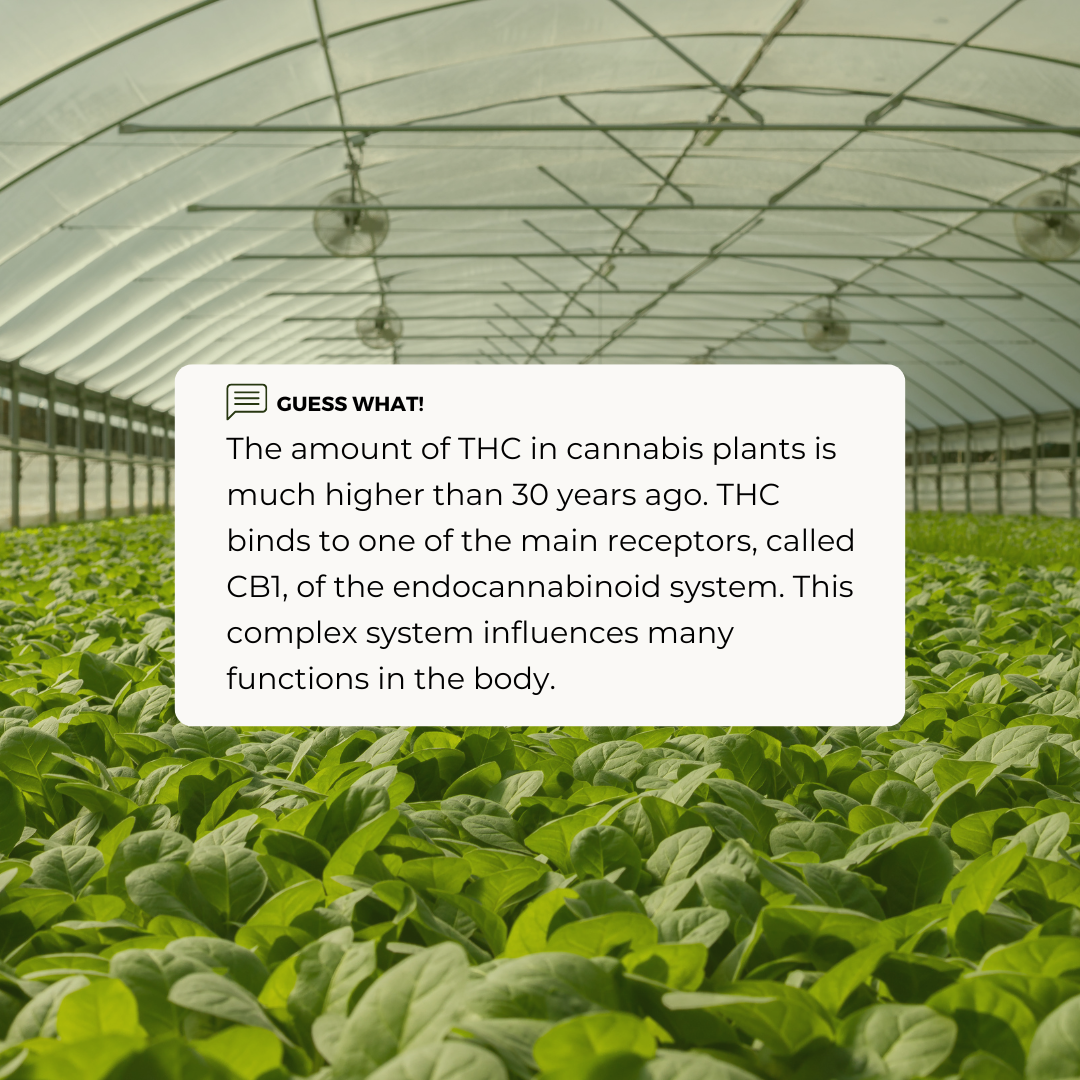
In the land of cannabis, is a plant called marijuana. People have been using it for centuries, but something started to change over time.

“Average THC concentration has increased substantially during recent decades due to several factors such as genetic breeding, and indoor growing conditions, and as THC is the main psychoactive compound found in cannabis, its effects have increased substantially,” said Shauli Lev-Ran, Co-founder and Academic Director of Israel Center on Addiction. “Furthermore, in several places the age of onset of cannabis use has decreased, further adding insult to the adolescent brain when exposed to such high levels of THC. This is particularly right for more regular users of cannabis during adolescents.”

  As marijuana became more potent, its effects became more intense. According to the article, “The Problem with the Current High Potency THC Marijuana from the Perspective of an Addiction Psychiatrist”, by The Journal of the Missouri State Medical Association, A lot of people who voted for marijuana legalization didn't realize that today's marijuana is much stronger than what was around in the past. The THC, which is the addictive part, has increased a lot. There are receptors in our brain that THC fits into, but they're not meant for us to take in THC. The problem is that the marijuana available now has much higher THC levels compared to before. In dispensaries, strains with THC content ranging from 17-28% are common.

“I don’t smoke anymore because I have a job that drug tests me but I used to smoke everyday for years,” said Georgia Southern Grad Student Brooklynn Tegeler. “I truly could not eat or sleep without doing it either.”

There was a study found on Sciencedirect.com called “Acute and residual effects of marijuana: Profiles of plasma THC levels, physiological, subjective, and performance measures.” In this study, there were three experienced marijuana smokers who smoked either 0, 1, or 2 marijuana cigarettes with 2.57% THC. They did this on two different days. 

They measured things like heart rate, subjective feelings, and performance. They found that right after smoking, heart rate increased, people felt the effects of the drug, and performance was slightly worse on some tasks. The effects lasted up to 24 hours, but were less noticeable on the second day. So, it seems like marijuana can affect performance for a while after smoking.

So, it's clear that the amount of THC in marijuana has risen over time, and it can have a significant impact on our bodies and minds. It's important for people to be aware of these changes and make informed choices.


Wednesday, April 17, 2024

The April 8th Eclipse

The April 8th eclipse started in Texas, and made its way through the midwest, in States including Oklahoma, Arkansas, Missouri, Illinois, Indiana, Iowa, Kansas, Pennsylvania, New York, Vermont, Massachusetts, New Hampshire, and Maine, making its way up into Canada. Some even were able to see an eclipse in places like Ireland, and Northern Ireland. Most others in Europe did not get the chance to see the eclipse however.


There is another solar eclipse that is expected to make it’s way through the continental United States. This however is not the first in a while. 


As many well know, unless you have been living under a rock, there was an eclipse where the path of totality went through South Carolina.


The last time a solar eclipse came through North America was not that long ago in 2017. We truly live in a time that is very special. 


Scientists have said in fact that we may not see solar eclipses like this in the future. This means that we are on Earth at the opportune time to see a total eclipse.


Jorge Villa Vergas is a professor of astronomy at Georgia Southern University who traveled to watch the total eclipse. Vergas was excited to go to the eclipse.


Jon Schroder, a spectator of the event thought that is was a cool event to see, even if he was not in the path of totality, Appling, Georgia saw about an 80 percent eclipse.


There have been several others on social media that have been talking about this event taking place. As the Weather Channel put it, many were awe-struck to see this eclipse.


The eclipse on April 8, 2024 was not like the one that occurred in 2017. Eclipse in 2017 was a total solar eclipse, but the moon in its orbit was closer to the Earth than usual, so this opened the opportunity for the suns rays, along with the light that was reflected from the stars behind the sun to seep through.


The most recent eclipse however, the sun and the moon were lined up just right to the point that the moon completely blocked out the Sun’s light, and you could see some of the stars that were behind the sun, from the light that was refracted from it.


If you were blessed enough to be in the path of the total solar eclipse at the time, it was basically like experiencing the night time, in the middle of the afternoon. A very neat experience.


The April 8th eclipse certainly was worth all the hype that led up to it.


https://en.wikipedia.org/wiki/Solar_eclipse


During the eclipse the sun is blocked out by the moon, and there is a shadow that is cast on the earth. Because the moon is not as big as the sun, there are some places that did not see the eclipse, and for some it was just after sunset, so it was simply a new moon for them.


Georgia Southern University has its own planetarium on campus that features a dome room with special projectors that can project onto a dome ceiling. This presents a cool picture, and more anatomically correct image if you are looking from the Earth to the skies.


This experience is good for all ages to go to, in fact they have several events that they put on every month.


The planetarium is a very educational place to go if you want to know when the moon will again be in just the right position to cast a shadow in front of the sun, blocking out its view.


Just incase you were wondering why some did not see the solar eclipse, and some only saw a partial eclipse is because the moon is not as large as the sun, and also the Earth is larger than the moon, this means that Some people will not see an eclipse, while others, that are closer to the path of totality will see the effects of the moon blocking the view of the sun.


Patrick Vereen, a spectator from Savannah, Georgia said that he was at work during the process of the solar eclipse, he said that it got darker than normal in the afternoon, but not super dark.


Some compared this U.V. decrease to looking through a pair of sunglasses. Logan Winstrop, who is a student at Georgia Southern University said “it was like you were looking through a pair of sunglasses.” it was darker, but not super dark.


If you weren’t able to go to the last eclipse, or you simply want to know when the next one is. It will occur in 2041, and the path-of-totality will go through Tallahassee, and Orlando Florida.


Monday, April 1, 2024

Metamaterials: Revolutionizing Material Science

by Kamryn Gibson

Graph by Kamryn Gibson

Metamaterials represent a groundbreaking field of research at the intersection of physics, engineering, and materials science. These artificially engineered structures possess properties not found in naturally occurring materials, enabling a myriad of unprecedented applications.

From manipulating electromagnetic waves to controlling sound propagation, metamaterials hold the potential to revolutionize various industries, including telecommunications, healthcare, and aerospace.

 “Metamaterials are engineered composites designed to exhibit properties not found in naturally occurring materials. They are structured on a scale smaller than the wavelength of external stimuli (like electromagnetic waves) to manipulate wave propagation in ways that go beyond the materials’ chemical composition. This manipulation enables unique functionalities such as negative refractive index, cloaking, and superlensing,” said Sajjad AbdollahRamezani.

This paper delves into the fundamentals of metamaterials, their unique properties, and their diverse applications. 

The fundamentals of metamaterials are structured composites engineered to exhibit properties not typically found in natural materials. They derive their extraordinary characteristics from their precise design at the micro or nano scale, rather than from their chemical composition alone.

The structural arrangement of metamaterials enables them to interact with waves, such as electromagnetic radiation or sound waves, in ways that conventional materials cannot.

Some properties of metamaterials include, one of the most striking features of metamaterials is the negative refractive index, which allows them to bend light in unusual ways. This property has led to the development of lenses with resolutions beyond the diffraction limit, promising breakthroughs in imaging technologies.

Additionally, metamaterials can exhibit electromagnetic cloaking, rendering objects invisible to certain wavelengths of light. While still in experimental stages, cloaking technology holds promise for applications ranging from military stealth to medical imaging.

Another notable property of metamaterials is their ability to manipulate sound waves. Acoustic metamaterials can control the transmission, absorption, and reflection of sound, leading to innovations in noise cancellation, sonic insulation, and even acoustic imaging.

By controlling the propagation of sound at the microscale, these materials have the potential to revolutionize architectural design, transportation, and entertainment industries.

Telecommunications: Metamaterials have the potential to revolutionize telecommunications by enabling the development of ultra-compact and efficient antennas, leading to faster data transmission and expanded bandwidth. Additionally, metamaterial-based devices could facilitate the development of next-generation optical communication systems, enhancing internet connectivity and enabling the realization of futuristic concepts such as quantum communication.

Healthcare: In the field of healthcare, metamaterials offer exciting possibilities for medical imaging and diagnostics. Metamaterial-based lenses could revolutionize techniques such as MRI and ultrasound imaging by providing higher resolution and improved contrast. Moreover, metamaterials hold promise for targeted drug delivery systems, where precise control over electromagnetic fields could enable the selective release of therapeutic agents within the body.

Aerospace and Defense: Metamaterials have significant implications for aerospace and defense applications. By manipulating electromagnetic waves, these materials could enable the development of lightweight yet highly effective radar-absorbing coatings for stealth aircraft. Furthermore, metamaterial antennas could enhance communication and sensing capabilities in military aircraft and satellites, improving situational awareness and communication reliability.

Energy: Metamaterials also hold promise for energy-related applications. By engineering materials with tailored optical properties, researchers aim to improve the efficiency of solar cells and enhance the performance of energy harvesting devices. Additionally, metamaterials could enable the development of novel techniques for controlling the propagation of light within optical fibers, leading to more efficient data transmission in telecommunications networks.

Challenges and Future Directions: Despite their tremendous potential, metamaterials face several challenges, including scalability, manufacturing costs, and environmental concerns associated with the use of exotic materials. Additionally, the complex interactions between metamaterials and waves require sophisticated modeling and simulation techniques for optimal design.

Overcoming these challenges will require interdisciplinary collaboration and continued investment in research and development. The development and use of metamaterials face several challenges: Fabrication Complexity: Creating metamaterials with nano- to micro-scale precision is technically challenging and often requires sophisticated fabrication techniques.

AbdollahRamezani also stated, “Scalability and Cost: Scaling up production while managing costs is a significant hurdle, limiting the widespread application of metamaterials. Material Losses: Metamaterials, especially those operating at optical frequencies, can exhibit high losses, reducing their efficiency and effectiveness.”

Looking ahead, the future of metamaterials holds promise for even more groundbreaking advancements. Research efforts are focused on expanding the range of achievable properties, improving fabrication techniques, and exploring novel applications in fields such as quantum computing, robotics, and beyond.

“The next decade promises significant advancements in metamaterials, with potential impacts across various fields such as telecommunications, healthcare, energy, and defense. Innovations are likely to focus on increasing the functionality, reducing losses, and improving the scalability of metamaterials. The convergence of metamaterials with other emerging technologies, like quantum computing and artificial intelligence, could further expand their capabilities and applications,” AbdollahRamezani expressed. 

As our understanding of metamaterials deepens and technology continues to advance, the possibilities for innovation are virtually limitless.

In conclusion, metamaterials represent a paradigm shift in material science, offering unprecedented control over the interaction between waves and matter. From bending light to cloaking objects and manipulating sound, these artificially engineered structures hold the potential to revolutionize various industries, from telecommunications to healthcare and aerospace. While challenges remain, ongoing research and development efforts continue to push the boundaries of what is possible with metamaterials, paving the way for a future defined by innovation and discovery.


Is AI taking over photographer’s jobs? By: Willow Handley


 Photo taken by: Willow Handley

Artificial Intelligence is taking over the world, maybe just not as fast as we would have thought. 


According to IBM.com, “Artificial Intelligence is technology that enables computers and machines to simulate human intelligence and problem-solving capabilities”. 


Hayden Wimmer, an Information Technology Professor at Georgia Southern University explained the concept of Nero Network. He said its “where you can look at natural phenomena’s in nature and kind of mimic those on a computer.”


He compared Nero Network to teaching a human how to swim the fastest possible and that is to strap a dolphin tail on them. This is to teach them how to adapt to the animal and program their behaviors to be like them. Similar to how they train the computer to be like a humans. 


We are constantly surrounded by AI and have been for many years, we may have just not noticed. Some examples of AI in recent years would be face recognition, social media, predictive text, chatbots, and smart cars. 


The groundwork for AI began in the early 1900’s but major developments didn’t happen until the 1950’s. There have been several well-known breakthroughs throughout this time that have been stepping stones for other scientists. 


One of the most well-known examples of the ground breaks is when Arthur Samuel developed a program to play checkers independently in 1952.


A few years later Samuel created another program that was able to play chess better than the humans who made it. 


More recently, in 2016, Hanson Robotics created a humanoid named Sophia. It was deemed an official robot citizen. This robot can replicate human appearance and emotions. It also can communicate fully like a human. 


Recent developments like Sophia are ones that have scared some of the human population. This put in perspective how powerful robotics and AI can be and the future they may hold in our everyday life. 


This fuels the fears that robots might one day replace humans and human jobs. 


Wimmer said that AI technology is a big snowball effect. Chatbots became really popular and the programming was introduced into several software’s. 


Once it gets big a lot of people began to throw money into it and that’s how they hire and train more people and get more resources and equipment. 


AI in photography has been a huge development that some photographers either love or hate. 


Some of the benefits that AI can have on workflow is analyze photographs and calculate optimal exposure, correct colors, and adjust shadows according to imagen-ai.com.


Adobe started implementing AI features and software to their programs in 2016. They added AI to photoshop in 2023 with Photoshop Version 25.0.


In Adobe photoshop, editors can use AI to remove things like walls, fire hydrants, or people from the background. It also allows the editor to flip through several options that AI provides to choose which one will best fit the photo.  


Wimmer explained that the program inside of photoshop has been trained on so many images and that’s how it is able to provide the editor with so many options to choose from. Wimmer said “they don’t tell you exactly how they you exactly how they do it you know, that’s their secret sauce.”


It can also extend the size of your canvas due to the advanced programing.


Although some photographers fear that AI will replace them and their creativity. 


Jaimee Griffin, a Photographer located in Middle Georgia, said “In the beginning it made me anxious! As a photographer, I was worried about AI potentially taking over my job and the thing I’m most passionate about.”


AI can take a description that the editor can insert into the program and create an extreme, highly detailed image within minutes. 


Photographers are reminded that AI is just a tool to help their workflow and productivity and there’s no way that a computer can replace the artistic eye and vision. 


Griffin said “Once I realized it could be helpful and take off my workload, I started using photoshop AI. I use it almost every season to remove frizzy hair and objects in the background that are distracting to the photo.”


Times are changing and technology is always advancing. People who work in the creative fields have to stay up on the latest technology in order to compete with the competition. 


New photographers may depend on AI to be the main tool during the editing process in the future, and they might reap the consequences of it later. 


When asked if new photographers should rely solely on AI or learn the skills for themselves Clay Malquist, a Freelance Photographer, said “personally I think both, learn the skills and fundamentals first and foremost, but AI is just another tool for creatives, it’s what you make of it.”