https://youtu.be/JJQ56rz2Pt8

Thursday, April 29, 2021
Tuesday, April 27, 2021
Friday, April 16, 2021
Monday, March 29, 2021
Robot Dog
By: Roxanne Cortner
Georgia Southern University’s robotics lab developed an advanced robot to interact with people.
In the robotics lab, a robotic dog has been created to interact with people who have disabilities. The target of this project is for people with disabilities, specifically children with autism, to be able to interact with something “real” even though they may not like physical touch or interaction.
“It is difficult for them to interact with people and living things, but easy for them to interact with toys,” Dr. Rios, an associate engineering professor, said.
Dr. Fernando Rios got his Ph.D in electrical engineering and helped develop the robotic dog to apply his research in artificial intelligence. One of the principles of this research is robotics. With artificial intelligence and robotics, Rios wants to mimic the way the human brain works. Rios described this process as being more complicated than mimicking the brain of an animal and needing a bigger computer to code the information in a human brain to put into a human robot.
A lot of coding takes place to develop a robot and get it to respond to verbal and nonverbal commands.
To develop the dog robot, instructions are programmed into a series of Arduino boards. Commands and responses are coded and then put into a program. This is then connected to the robotic system. The system is then programmed with sensory mechanics to take in movements.
The robotic dog has cameras and five different sensors. These cameras make it possible for the dog to see the commander and respond appropriately. The autonomous sensors allow for the dog to function on its own. Along with autonomous sensors and Arduino boards, microcontrollers allow for the robot dog to be controlled without a remote or another person physically controlling the robot.
Essentially, the robot is acquiring it’s actions and responses through its programming, and anyone who knows the language that it was programmed with can interact with it by changing or altering its actions through its coding.
The combination of these applications allows the robotic dog to mimic the actions and emotions of a real dog. The robot dog can find a bone, move his ears, wag his tail and recognize objects.
“It’s combining mechanical engineering with electrical engineering and applying them to make something happen,” Nicholas Walsh, an engineering student, said.
Dr. Rios says we are still not at the level to mimic humans, but we are getting there. Movies show that advancements in technology are allowing for the development of robots close to human-like, but it has not fully been developed yet.
Students in the engineering department have created humanoids, or human-like robots, that are able to kick a ball and move, but due to costs, the robot was not human-like to the potential they would like it to be.
Students have also developed other non-human-like robots that use autonomous sensors that allow people to mow their lawn without being on a lawnmower. This bot has been programmed to respond to commands from an app on a phone. The controller can put the design or outline of the lawn into an app and the bot will follow the instructions.
More advanced drones are also being developed within Georgia Southern’s robotics lab. Currently, these drones are able to follow commands by a remote control, but researchers are hoping they will one day be autonomous as well. Some researchers have already begun this advancement with hand signals to a camera that the drone responds to.
Dr. Rios talked about drones and how they have become advanced enough to fly on their own or go into a burning building, find the fire and put them out. This is a more advanced version of the drones and robots that go into natural disasters with cameras to find survivors.
With more research, humanoids could become a thing of the future if researchers continue to advance drones and robot animals.
Saturday, March 27, 2021
IS LAUNCH ANGLE THE BEST METRIC?
By: Chase Martaus

The evolution of technology and science has made its way into the game of baseball. The way a baseball game is presented to its fan on television is more specific and complex.
Television networks are not just broadcasting baseball games. They are adding metrics and science to their broadcast.
As soon as a ball comes off the bat, viewers know how far the ball was hit, at what speed the ball comes off the bat, and the direction down to the degree the ball went, which is now referred to as launch angle.
Every ball that is hit has a launch angle; a result-based system that measures in degrees exactly which direction the ball leaves the bat.
The angle is 10 degrees or lower for a ground ball, a line drive is 10 to 25 degrees, a fly ball is 25 to 50 degrees off the bat, and a popup is a higher than 50-degree angle.
This phenomenon was formally introduced to baseball fans in 2015, when Josh Donaldson, who put together an MVP season the year prior while playing third base for the Toronto Blue Jays, introduced it while appearing on the MLB Network for a segment on hitting.
“If a coach tells you to get on top of the baseball, tell him no,” said Donaldson. “In the big leagues, these things that they call ground balls are outs. They pay you for home runs.”
Not everyone agreed with Donaldson’s statement. Dr. Daniel Czech is a former pitcher in the Milwaukee Brewers organization who coaches high school and travel baseball. He expressed his concern for the young athletes who watched Donaldson.
“Broadcasters use this word and they do not really know what they mean or express the validity or liabilities of it,” said Czech. “Then, those words become the lexicon of baseball.”
Prior to Donaldson’s segment in 2016, the average launch angle in baseball was 9.96. In 2020, the average launch angle in Major League Baseball was measured at 11.9 degrees, which is a substantial increase.
According to metrics from ESPN, Joey Gallo of the Texas Rangers had the highest launch angle in 2020 with a 26.8 degree angle. The next closest hitter was 3.6 degrees lower than Gallo.
It did not lead to more home runs from Gallo. He hit just 11 home runs in the 60 game season in 2020. He also hit a career low .181, and had the fourth most strikeouts in all of baseball with 79.
Gallo’s numbers appeared to be an outlier though, as the number of home runs across baseball have gone up as the degree of the swing increased. Over the course of a 162 game season, the total number of home runs hit in the MLB was 4,909 in 2015; however, in 2019, the number shot up to 6, 776 home runs.
Launch angle is not only used in the major leagues. It has made its way to all levels of baseball including the college ranks, high school and travel ball.
Kermit Smith is the head baseball coach at Appalachian State. He and his staff use it to decide which prospects to pursue in recruiting.
“We have a new evolution of metrics that we are using to recruit that were not available to us 30 years ago,” said Smith.
With hitters taking bigger swings, it forces pitchers to make adjustments to the way that they pitch. Zach Sanders, a pitcher at Tusculum College in Tennessee, says that pitchers look for a hitter’s launch angle when preparing to face them.
“We are not just looking for tendencies from a hitter anymore,” said Sanders. We are looking to see whether or not there is an uppercut in their swing, and the location in which we pitch is determined by the degree of their swing.”
It remains to be seen how long this phenomenon
remains in the game of baseball. There are proposed changes in the MLB to
change the baseball in a way that will reduce home runs.
Photodynamic Therapy
Nia Dorsey
A professor at Georgia Southern is studying the comparison of photolysis capabilities between protonated and unprotonated tetraphenyl porphyrin solutions. Jim LoBue is a physical chemistry professor at Georgia southern. He earned his Bachelor of Arts degree from Carleton College in 1978 and his Ph.D. from Wesleyan University in 1986. His graduate work involved the study of van der Waals molecules using microwave spectroscopy in a molecular beam under the direction of Dr. Stewart Novick.
Dr. LoBue is involved in two very different projects in this area of research. His students at Georgia Southern investigate the photochemical properties of tetra-substituted porphyrins. These molecules have properties that make them candidates for a type of cancer therapy called photodynamic therapy. This work involves using various spectrometers available in the Chemistry Department, principally the ISS-K2 Phase Modulated Spectrofluorometer.
In Lobues laboratory, they have many molecules that are derived from something called Porphyrin. They use molecules with a core unit that looks like a structure similar to the outer of a spider web. “It is a chemical formula, showing you the pattern that the atoms choose to connect.” Chemists have a shorthand because they don’t have to draw everything out. After all, they have so much detail that you cant see everything. So what they do is draw different line segments in the web that represent chemical bonds and wherever there is a vertex. There are spaces with no symbols representing an element; you are to imagine a carbon put there. A basic ring would have 20 carbons around it. In the center, there would be nitrogen atoms. And another grouping of atoms which again is a shorthand.
They have a whole series of “webs” that are different based on what the PH is. So they have between 25 and 30 other molecules that are different based on a choice of whatever you wanted to put on the outer segments. The molecule is noticeably very symmetrical. The center is called a Porphyrin unit, and it appears a lot in biochemistry. The hemoglobin molecule has four units and what they are supposed to have in the middle is an iron atom, and the iron atom carries oxygen. So the hemoglobin when fully oxygenated as four oxygen molecules in every hemoglobin molecule. In your lungs, the hemoglobin grabs these very favorably oxygen molecules and carries them into the bloodstream wherever your tissues need them, which is all over your body.
A student of his, Megan Dempsy, aided in explaining his research, “Photodynamic cancer therapy (PDT) is an effective way to treat external cancers. Due to their ring structure and double bond character, porphyrin molecules work well as photosensitizers in PDT. Tetraphenyl porphyrins have four phenyl groups attached to the central ring.”
Dempsey introduced me to the methods they used to reach results. Stock samples of porphyrin solutions were created and diluted to 5μM. 180μM DPA was added to the answers to make them 2.5μM Porphyrin and 90μM DPA. The solutions attempted titration with varying levels of HCl. The level was determined with previous research done in porphyrin titration. Microliter aliquots of HCl were added to the diluted Porphyrin, and DPA solutions and UV-Visible light spectra were taken. Unprotonated solutions undergo photolysis with 514nm laser light, but protonated solutions undergo photolysis with 635nm laser light. UV-Vis spectra were taken every 15 minutes for 90 minutes total. The spectra were analyzed in excel for DPA depletion.
This study found that it was inconclusive if the protonated Porphyrin worked as well as the unprotonated Porphyrin in photodynamic cancer therapy (PDT). The work towards a usable porphyrin is essential because the laser light for protonated porphyrins is longer. This longer laser light can penetrate tissues more deeply and make PDT more effective for the patient.
Short-tailed Shrews
By: Alexis Southward
For an entire summer season, Georgia Southern Associate Biology Professor J. Michelle Cawthorne took a dive into the world of Short -tailed Shrews.
Short-tailed Shrews, known for their being the largest specie of Shrew and the only Venemous mammal in North America were the topic of Michelle Cawthorne’s PHD research at Bowling Green State University.
“Short-tailed Shrews are very popular mammals in Europe and Russia. They aren’t looked over like they are here in the United States. Spreading my knowledge about how intricate and energetic their lives are could allow for people to have a better understanding appreciation for the species,” said Cawthorne.
Their size and venomous nature were only few characteristics that caught the eye of Cawthorne, but she decided to take a further look into the daily lives of the Short-Tailed Shrew.
When asked why she felt this kind of research was necessary, Cawthorne expressed that small mammals greatly piqued her interest, especially Shrews due to the United States’ ignorance toward them, and that spreading more awareness about shrews would better educate the world on the true complexities of the species.
“Researching things such as this may seem insignificant to some, but I believe that researching and having a better understanding of other species’ beside our own and unknown things around the world in general can give us more motivation to conserve and preserve," said Cawthorne.
Cawthorne’s research was based on examining their eating habits, examining how they nested and how often throughout the day, and exactly how they handle prey and retrieving other food.
Her research was conducted by way of radio telemetry, which is the process of using radio signals to determine location.
With this technology, Cawthorne was able to track specifically three shrews at a time each day to get a glimpse of where the mammals were going, how often, what they did when they reached certain destinations, and how often they came back to their nesting place.
From this experiment, Cawthorne gathered that the short-tailed shrew have fairly defined home range and are active about 80% of the day.
She also solidified that shrews use their venom in order to catch prey, stating that “they must eat more than half their body weight to survive, so the venom makes them a very dangerous predator, contrary to what some may believe due to their size”
While Cawthorne was very grateful to be conducting this research, she was very concerned with an imperative piece of the experiment, which was getting the radio transmitters into the shrews.
“I Was extremely worried because in order to track the shrews, a radio transmitter had to be surgically injected into them, and it saddened me to think about if they would make it or not once we let them back into their habitat,” said Cawthorne.
Another factor Cawthorne believed to be a disadvantage was the time intensity. Due to the shrews very vigorous lifestyle, she had to stay up for long hours to track the actions of the shrews.
When asked what she would do differently or advice she would give someone conducting the same research in the future, Cawthorne stated that she would take full advantage of the new DNA and transmitter technology.
The most rewarding part of the research to Cawthorne was getting past the hurdle of problem solving.
According to Cawthorne, there were many unforeseen obstacles, and her biggest accomplishment was being able to move past them and successfully finish her research.
“I like the problem solving part of science. It gives me a sense of accomplishment and success to know that I was able to persevere," said Cawthorne.
Artificial Intelligence in Education
By Jacob Johnson
In a world of smartphones, self driving cars and autonomous robots, society is engulfed in technology, more specifically Artificial intelligence, which may be the future of education.
AI is used throughout daily life, so much so that it is typically not even thought about and AI might not be what you expect.
“When people think about artificial intelligence, most of the time they just think that means robots, but there are a lot of forms of AI,” said Chase Queen, an engineering major at Georgia Southern University. “To me artificial intelligence is giving a program a method to make decisions and learn from itself and those decisions that it makes.”
AI can be found in a variety of places including Smartphones, commercial airplanes and even email spam filters all have AI.
Most, if not all, smartphones are equipped with voice assistant software, which is one of the most commonly used forms of AI.
The use of Artificial Intelligence has also integrated itself into education. With new technologies such as AI assisted tutoring, students are able to receive personalized lesson plans to help them in areas they may need help in.
Queen said that AI being integrated into schools will help free up teachers from grading so they can spend more hands on time with their students. He went on to add that AI systems are designed to maximize efficiency in order to save “man hours” on things outside of teaching students.
Other forms of AI in education include testing systems, which helps to determine if the overall goal of a certain lesson is being achieved through the current curriculum, and if not, then how to improve it.
“One form of artificial intelligence I have researched is a program that can read essays from students and grade them based on certain criteria, which has shown to cut grading time in half,” said Jack Huesman, a mechanical engineering major at Georgia Southern.
When thinking about AI, there are a lot of movies and books that show them eventually taking over by learning far more than what their creators originally thought, but that is not something many scientists are too concerned about, at least not yet.
Huesman believes that humans will always hold more of a facilitator role, being there to guide the AI where it needs it and establishing a deeper human connection where it is needed.
Looking at the essay grading Huesman discussed, the AI would be able to show what was wrong or what could be improved, so that the teacher could then step in to help struggling students and provide deeper explanation where needed.
Implementing AI into the classroom is about helping teachers instruct, not to replace them, which is a concern for many, in industries where AI has been introduced, like self driving cars and delivery trucks.
Self driving cars are designed to eventually replace drivers, cutting payroll costs and reducing car accidents by up to eighty eight percent in some studies, however it would be much more difficult to replace teachers.
AI has also been implemented in the curriculum for learning different languages. A study by Blackburn (2020) showed that students are immersed into a simulated world where they would have to order food at a restaurant in another country or even find transportation to the hotel they are staying at, all in order to help guide their learning of the language and culture.
Cheryl Aasheim has been working in the information technology field for several years and since her time at Georgia Southern, she has researched and reviewed studies on how information systems can help in education. Her research has guided policies to make educating more efficient.
Aashiem believes AI can be involved in education but believes there are challenges that can come up with how you implement it into educators routines because if an educator feels overwhelmed or threatened they may reject it.
AI may one day change what education looks like, however for now, changes are much slower but professors like Aashiem and students believe AI will one day revolutionize the way we teach and learn.
New Covid-19 Variant Found In Georgia

Covid-19 cases in Georgia have been on the steady decline, though cases of the main strain continue to drop there have been new variants of the virus detected in the state.
In a press conference the Georgia Department of Public Health announced and confirmed that there has been one case of the variant from Brazil found in Georgia.
The Brazilian variant is the third one found so far and is said to be
the most contagious. The other variants that have been found in Georgia are
from the United Kingdom and from South Africa. The county of the confirmed
variant case was not released during the press conference.
Bulloch County Health Department recommends that citizens continue to social distance, wear mask and not to remain calm. “This is not a time to panic and go see loved ones to make sure they are okay. It has not been released where in Georgia the variant was found, so going out and vising people is not the wisest thing to do. The best thing to do is to keep social distancing and wearing mask, as for the new variant that was found it is important that they do contact tracing to keep others safe and hopefully stop the spread of this variant,” said nurse Jackson.
According to CDC officials
Georgia currently 367 confirmed Covid-19 variant cases, there are 351 cases of
the UK variant, 15 cases of the South African variant, and one case of the
variant from Brazil.
Georgia Southern student
and Covid-19 survivor Hailey Lovelace does not feel as though the new variant
should bring about any major changes in the way that people proceed in their
daily lives. “I don’t think this new variant should lead to a shutdown, I
understand that it is more contagious and more dangerous, but there is only one
case of right now, so we really should not worry right now, let’s worry when
there are 100 cases,” said Lovelace.
According to the CDC the new variant has the potential to lead to more cases of Covid-19 because of its ability to spread easier and quicker than the main strain of Covid.
Reports
from the CDC also suggests that antibodies in the Covid-19 vaccination may be
able to recognize and help fight off these variants.
Georgia Southern alumnus
Rickey Beltran voiced his concerns with the new variant, “I have the vaccine
but I’m still kind of nervous, I mean the vaccine isn’t a guaranteed protection
from the virus, and now on top of that there are more strains being detected.
If the vaccine covers the various strains then okay, I’m satisfied but if not,
then I’m going back in line for the new vaccine whenever it drops,” said
Beltran.
Statesboro resident Adam Hampton has doubts
about the new variant, “I’m not doubting that it exists, what I doubt is the
severity of it. If the virus variant was really as dangerous as people believe
that it is then why not say where it was found so we know to stay away from
that area, I have had Covid already and it was not that bad, so if this new
strain is like the old one then I’m not too worried.”
Georgia has expanded the eligibility
for the Covid-19 vaccine which now includes all Georgians from the age of 16
and older.
The CDC still recommends that people wear a mask and
to remain social distancing to help slow the spread of the virus.
Preparing the unprepared
By: Eliel Ramirez
Saying the coronavirus pandemic was and continues to be an inconvenience is an understatement.
With the ability to spread through close contact and through the air, it made it difficult to be in the same room as others without the fear of contracting the virus.
Schools took a big hit having to close and were forced to adopt a virtual way of learning.
Colleges and universities around the world had to send students home, leaving many unsure when they would be able to return.
“It was important to go online because large groups of people together was not safe,” Wilekia Mayes, senior education major and college teaching assistant, said. “If we had continued in-person learning we ran the risk of parents pulling students out of school so it was just easier to just switch to online learning.”
Mayes said the challenge was switching all the curriculum to an online format. “Staring at a screen all day isn’t fun,” she said. “Finding new resources to make virtual learning fun and effective was difficult.”
As the number of students, faculty and staff allowed on campus decreased, the dependence on technology rose.
According to Mayes, one issue educators had with technology was assignments would get turned in and it was difficult to verify if the student was being honest so educators had to figure out which assignments deserved a zero or a pass.
Going virtual seemed like an easy fix, especially for students in programs such as accounting or journalism. But for students in more hands-on programs such as nursing, it left them lost and feeling unprepared.
“I definitely would not say going virtual last year was ideal,” Jarred Warren, a Georgia Southern accounting graduate student, said. “It for sure made learning harder, but I wouldn’t say we are a hands-on program like nursing. They for sure had it worse.”
Mayes said a big plus for the dependence on technology has allowed the students to challenge themselves in ways that hadn’t before. Preparing them for the future.
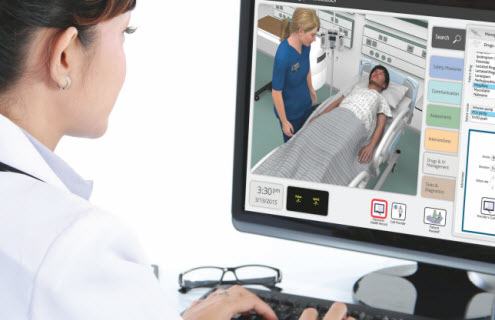
As hospitals were closing because of the pandemic, educators had to teach using simulations to replace in-person clinical experiences.
“Going virtual totally ruined our learning,” Ana Mora, a Georgia Southern graduate and current nurse at the Aiken Regional Medical Center on the cardiac floor, said. “Some hospitals adapted to a longer orientation when hired to offset the learning needing to work since we missed it.”
Nurses were already stretched thin during the chaos, applying that on top of having to make sure unprepared students are keeping up with them just added to the stress.
Mora says that a lot of the nurses were worn out from over working because the patients did not want a student nurse.
“Nobody wanted student nurses,” she said. “I can’t blame them though, I wouldn’t want someone who was getting a degree from zoom university.”
Technology was used heavily to make up for the lack of in-person training. Educators were forced to teach through a camera.
Being a medical profession, the professors in this program understood the severity of the virus and had to go to great lengths, creating new ways to teach the material.
Although virtual training may not be as effective as hands-on training, nursing educators had to adapt in order to ensure the students were as prepared as possible for the real world.
“What we were learning online, is not even a percentage of what we learn in person,” Mallory Mahue, a senior nursing student at Georgia Southern, said. “Patients aren’t black and white like they are in textbooks.”
In a way, the pandemic was their first lesson in expecting the unexpected. Every shift is different, a nurse never knows what to expect when they walk in. Having to adapt throughout the day to whatever is thrown their way.
This hurdle compelled them to become flexible in their learning, even if it is not the ideal way to learn.
The major difference between virtual and in-person is the patient.
“Once you have them in person, it’s like you’re looking at the patient as a whole person with a lot of problems,” Mahue said. “Rather than looking at a fake simulation focused on one issue at a time.”
With advancements in technology, virtual simulations allow students to practice techniques and challenge their medical knowledge to better prepare for a real-life situation. However, it still seemed to be a problem.
Mora said she had nurses that refused to have students because they did not have the time to teach them something they should have learned before arriving there.
Hospitals were forced to extend their orientations in order to better prepare new hires for the job.
One downside to advancements in technology is the price. Many companies offered their services for administrations at a discounted rate or even at times free.
However, access to a computer or internet is not something that everyone has the privilege of having.
Mora said she graduated feeling unprepared. She said that the simulations helped a lot, but she quickly realized after beginning her job that it could never replace the real deal.
I reached out to a nursing professor asking her how she handled the transition and what were some of the obstacles she faced in ensuring that her students were prepared. I also asked her how the coronavirus and the way it spread hindered their learning, however I have not received a response as of yet.
Subscribe to:
Posts (Atom)